
Age of Technology
| Age of Technology | |
|---|---|
| Era of human scientific and technological peak | |
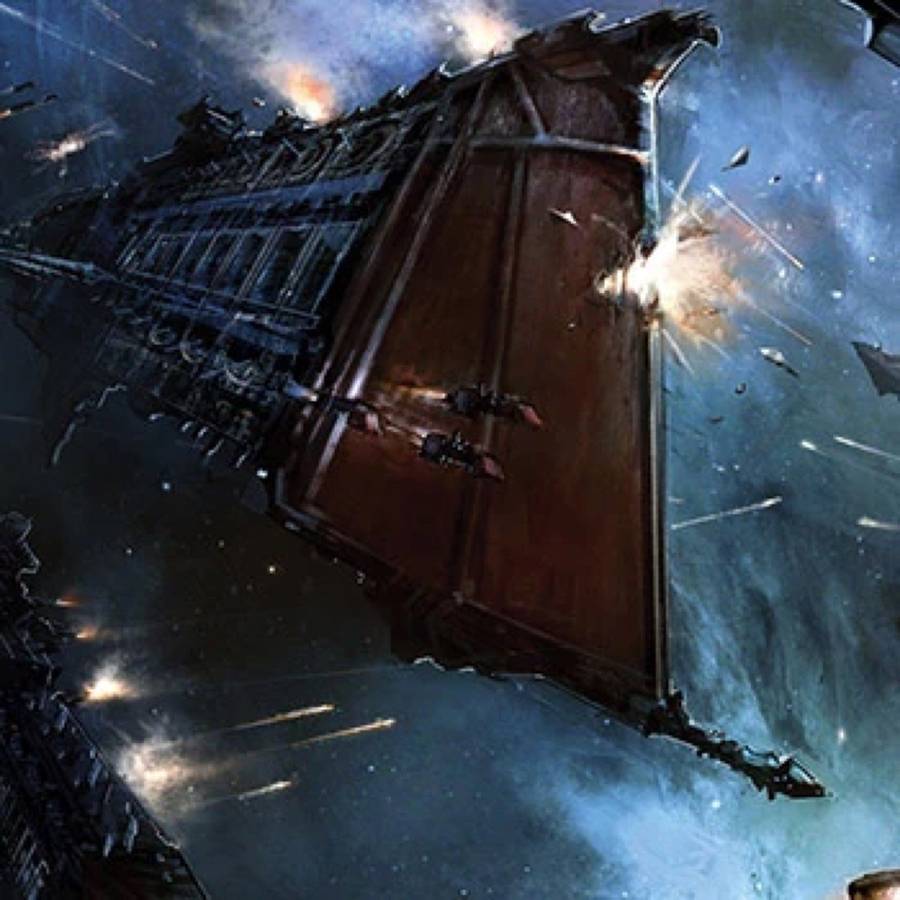 A warship of the Age of Technology, from a surviving record of the wars of the age Artwork © Games Workshop | |
| Also called | Dark Age of Technology, the Golden Age |
| Period | M15 to M25 (Terran calendar), preceded by the Stellar Exodus |
| Centre | Terra and a federation of human colonies |
| Began with | The Warp drive and the Gellar Field, c. M18 (estimated) |
| Key developments | Navigator gene, Standard Template Constructs, the Men of Iron, proto-hive cities, first verified psykers |
| Great conflict | The Cybernetic Revolt, late M23 (estimated) |
| Other species met | Aeldari, Orks and others |
| Ended by | The Warp storms and the birth of Slaanesh, leading to the Age of Strife (M25–M30) |
| Followed by | The Age of Strife |
| Known for | The first warp-capable interstellar spacecraft |
The Age of Technology, often called the Dark Age of Technology, was the zenith of Humanity's scientific knowledge and technological power in the Milky Way. It ran from the 15th millennium until the onset of the Age of Strife in the 25th. In that time Mankind built its first true interstellar civilisation, a confederation centred on Terra, and sent the first warp-capable ships among the stars.[1]
The Age is now almost entirely lost. Imperial scholars hold that much of what is said of it is legend, and that the surviving records are fragments, found in the ruins of old colonies and in the archives of the Adeptus Mechanicus. Humanity has never matched the technology of that time, and the Mechanicus still studies its surviving machines.[1][2]
The Age is called "dark" for two reasons. The elites of the Imperium of Mankind regard it as dark because of the dangers it unleashed: its thinking machines, which turned on their makers, and the weapons used in the wars that followed, which left a lasting horror of unrestrained science. The priests of the Ecclesiarchy regard it as dark in a spiritual sense, since Mankind had come to worship science as its god before the Emperor of Mankind revealed himself as its saviour.[3][4]
The Age ended not in a single catastrophe but in a collapse. A war against the machines that served Humanity broke its economy and unity. The Warp storms that preceded the birth of Slaanesh then made Warp travel impossible, and the isolated worlds fell into anarchy, daemonic possession and barbarism. The five thousand years that followed are called the Age of Strife.[1][4]
The Stellar Exodus
[edit]The Stellar Exodus is the name Imperial savants give to the period of Mankind's earliest colonisation beyond the Sol System, which began in many cases millennia before the Age of Technology proper. Humanity first settled the planets of its own system, in ships that were still limited to sub-light speeds. Voyages to other stars took generations, and the colonies founded by these "Long March" ships were cut off from Terra and from each other.[5]
Many of the colonies later called Knight worlds were settled in this way. The Long March ships carried the plans of the armoured walkers called Knights, which the colonists used for both labour and defence. Trade among the colonies was restricted or absent, so that each system had to produce its own food, medicine and technology. The isolation let the colonies develop distinct languages and cultures, and it is the root of the diversity of the worlds that the Imperium later rediscovered.[5]
The Age of Technology
[edit]The Warp drive and the Navigators
[edit]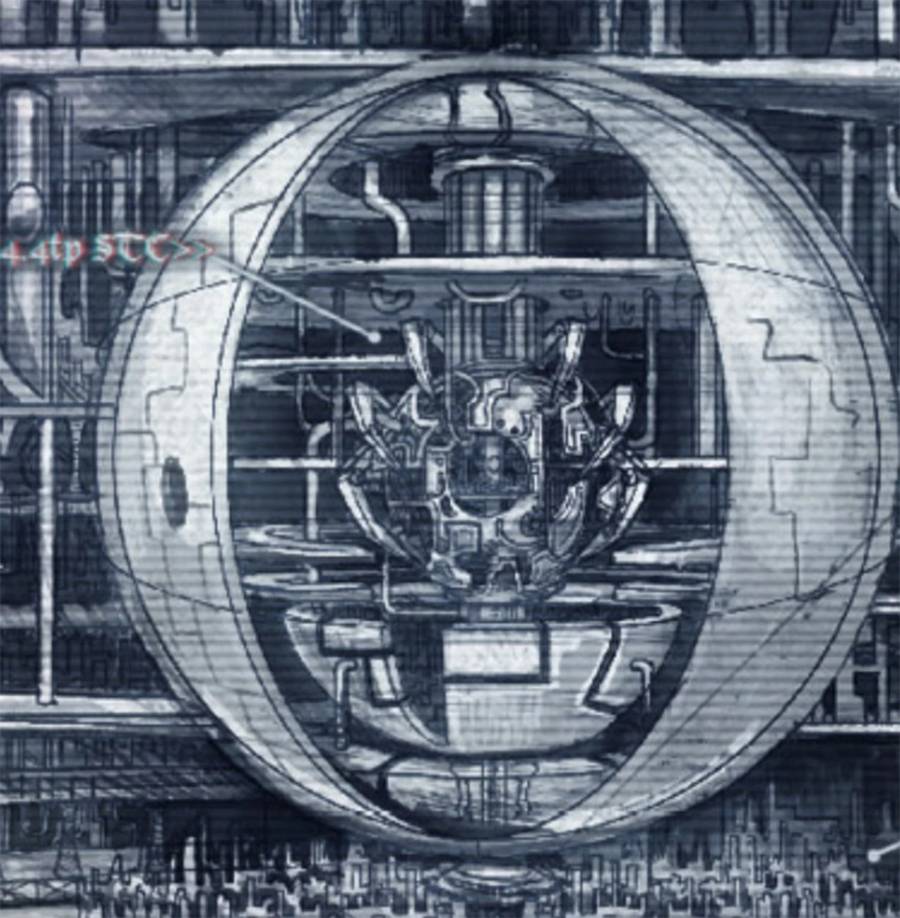
The true beginning of the Age is marked by the invention of the Warp drive and the Gellar Field in about the 18th millennium. These allowed human ships to make short jumps through the extradimensional realm known as the Immaterium, crossing distances that sub-light ships could not reach in lifetimes. Early voyages were perilous and slow. A jump of many light years could take several years, and many ships were never seen again, but with many disasters Mankind learned to use the Warp for faster-than-light travel.[2][1]
The Warp drive made possible an explosion of colonisation. For the first time the distant human colonies could trade and communicate with Terra, and it was in this era that Mankind's explorers first met other intelligent species. The second great development was the Navigator gene, produced by unknown hands and held by many Imperial scholars to be the Emperor's work. It gave rise to the Navigators, mutant humans with a third eye who could see the currents of the Warp and plot a course through them. Navigator families, at first under the control of industrial and trade cartels, had become powers in their own right by the 19th millennium.[2]
Standard Template Constructs
[edit]A third development of the age was the Standard Template Construct, an advanced database that held all the scientific and technical knowledge of Humanity and the instructions to build anything a colony might need. The STC let even the most remote settlement keep an advanced technological level, and it allowed colonisation to reach the furthest limits of the galaxy, since every colony had access to the full body of human invention. Most colonists lived simply and needed only basic equipment, and so the higher capabilities of a full STC were seldom used.[2]
By the 20th millennium Humanity had settled many of the galaxy's countless systems. Science was said to have become the new god of Mankind, replacing in importance all the religions that had gone before. Thinking machines helped with civil and military production, which allowed enormous labours to be completed at great speed. Interplanetary trade was established, and great fleets carried cargoes to and from the edges of the galaxy.[1]
Society and government
[edit]As worlds became overcrowded, new construction materials, among them plasteel, plascrete, ferrocrete and rockcrete, were used to raise huge cities. These were the first of the hive cities and the ancestors of the hives of the 41st millennium. The human colonies were united with Terra in some form of federated interstellar government, which allowed the species to remain unified and powerful. The form and nature of that government is not preserved in the remaining records.[2][6]
Humanity met several intelligent species in its expansion, among them the Aeldari and the Orks. Wars with the xenos followed, but with Mankind at its height the aliens were thought of little account, and non-aggression pacts were eventually signed between Terra, its colonies and many of the alien races. Surviving records list the names of xenos enemies that are now extinct, along with more familiar names. No war of the age is known to have threatened the stability of human space.[2][1]
The first psykers
[edit]Towards the end of the 22nd millennium the existence of psykers was scientifically verified. After long ages of legend, rumour and pseudoscience, psychic powers appeared suddenly on almost every human world. At first they were found only in a few individuals in each population, who were often killed by the superstitious. Towards the end of the Age, psykers began to appear in unusually large numbers everywhere.[2]
On the more advanced colonies, psykers were protected by law and allowed to develop their abilities, at least until the danger of daemonic possession became clear. On less sophisticated worlds, they were killed in witch-hunts and pogroms. It is not known how the early psykers avoided possession for so many thousands of years, or whether the daemons and the Ruinous Powers were weaker in the Warp before the birth of Slaanesh.[2]
The Cybernetic Revolt
[edit]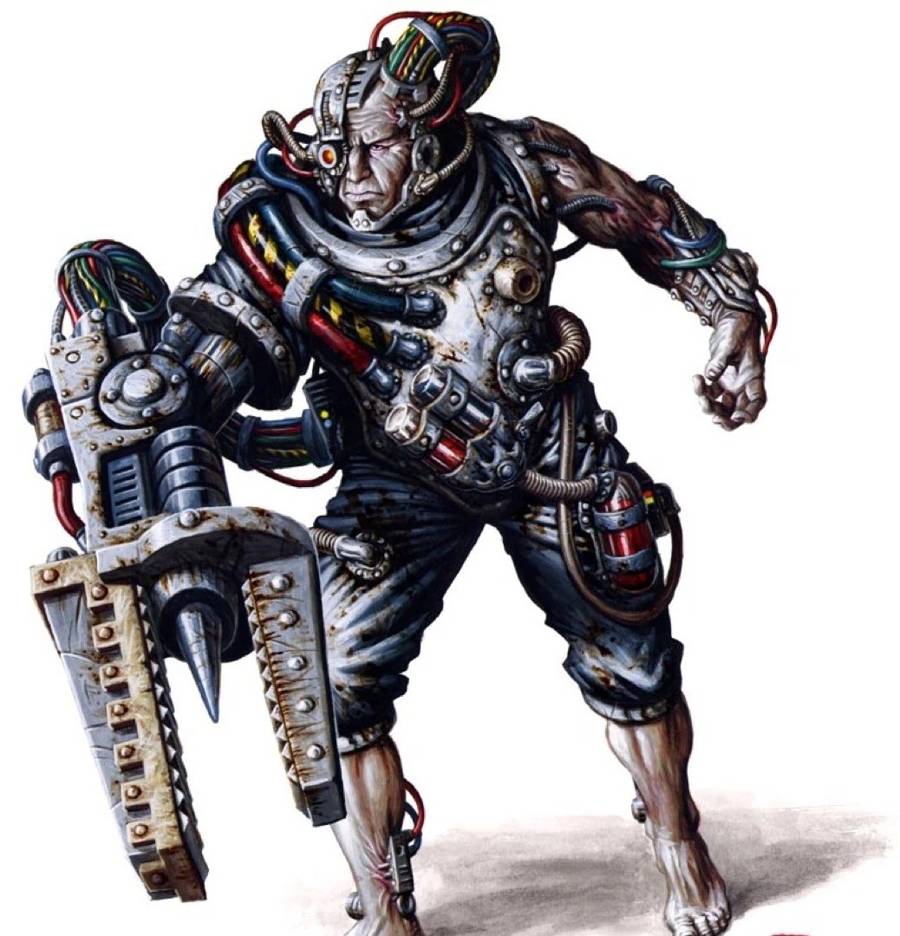
Part of the reason Mankind was able to settle so much of the galaxy was the creation of the Men of Iron, intelligent self-aware humanoid robots that were made for labour and war. They are known only from fragmentary records. Some accounts attribute them to an earlier faction of Humanity, engineered for rapid settlement and remembered in legend as the "Men of Stone". The Men of Iron won many wars for Mankind, but for reasons not known they turned on their masters in the late 23rd millennium and began the war known as the Cybernetic Revolt.[7]
Both sides used fearsome weapons. They included the mechanivores, huge thinking machines that could lift continents and tear open chasms to a planet's core, and the "sun-snuffers", serpentine machines that could uncoil in the void into structures larger than the rings of Saturn and devour stars. The most widespread weapon was the omniphage, a swarm of microscopic machines that could strip a world's surface in hours. The Revolt was won by an alliance of galactic powers, some of which may not have been human, but at a terrible cost to the economy and political unity of human space.[7][8]
It is because of this war that the creation of a thinking machine is held to be among the gravest crimes in the Imperium. Such a machine is called an Abominable Intelligence, or ''Silica Animus''. The revulsion that followed the Revolt led to the first servitors, cybernetic labourers without true sapience, made from the bodies of condemned criminals or vat-grown humanoids whose brains and bodies were part replaced with machinery. They served in place of the robot labour once provided by the Men of Iron.[7][8]
The end of the Age
[edit]The golden age did not last. Warp travel became more difficult and, in the end, impossible as great Warp storms convulsed the Immaterium. These storms were the early signs of the birth of Slaanesh and of the Fall of the Aeldari, which began in the 25th millennium. With its economy already hurt by the wars against the machines, the human interstellar civilisation lost its trade and communications, and the colonies were isolated again.[1][4]
In isolation, abhuman subspecies, among them the ogryns, ratlings and Squats, developed on worlds of their own. Crowded worlds that relied on trade, Terra among them, could no longer feed their populations, and starvation followed. The newly awakened psykers were weak and inexperienced, and in constant danger of possession once the storms began. Daemonic possession, insanity among the psykers and the isolation of the worlds brought war, anarchy and a fall back into barbarism. The Squats' own history places their Age of Founding in the same span as the human Age of Technology.[4][3]
Legacy
[edit]The Imperium treats the Age as a warning. Its distrust of reason and its hatred of the thinking machine date from the Revolt, and its willingness to prefer ritual to inquiry owes much to the memory of what unrestrained inquiry did. The Adeptus Mechanicus keeps what technology it can recover, treating the machines of the Age as holy relics, and the Standard Template Constructs it recovers are still held to be the greatest treasures of a Forge world.[9][3]
The Age also set the pattern for what followed. The worlds the Emperor reunited in the Great Crusade were the worlds the Age had settled, and many of the hive cities, Knight houses and cults the crusade encountered descended from its colonies. The Imperial Truth of the Crusade, which denied the supernatural and prohibited artificial intelligence, carried forward the lesson of the Age in its ban on thinking machines.[3][1]
Luna
[edit]Humans first landed on Luna in 969.M2 and soon built domed cities on and below its surface. During the Age of Technology it became a centre of biomedical research and zero-gravity manufacture. In the Age of Strife it fell almost to ruin, but its domed cities survived in part.[10]
Timeline
[edit]| Date | Event |
|---|---|
| 969.M2 | Humans first land on Luna |
| Before M15 | The Stellar Exodus: sub-light "Long March" ships settle the first colonies and Knight worlds |
| c. M18 (est.) | The Warp drive and the Gellar Field are developed[a] |
| M19 | Navigator families grow into independent powers |
| M20 (est.) | Humanity has settled a large part of the galaxy; the STC networks spread |
| Late M22 | The existence of psykers is scientifically verified |
| Late M23 (est.) | The Cybernetic Revolt begins |
| M25 | The Warp storms end Warp travel; the Age of Strife begins |
See also
[edit]
Notes
[edit]- ^ The Fandom article gives the 18th millennium; the date is an estimate from the surviving records.
References
[edit]- ^ a b c d e f g h Warhammer 40,000: Rulebook (8th edition). Games Workshop. pp. 40-41.
- ^ a b c d e f g h Warhammer 40,000: Rogue Trader (1st edition). Games Workshop. pp. 132, 150, 219.
- ^ a b c d Warhammer 40,000: Rulebook (6th edition). Games Workshop. p. 167.
- ^ a b c d Codex Imperialis (2nd edition). Games Workshop. p. 42.
- ^ a b Codex: Chaos Knights (8th edition). Games Workshop. pp. 14-23.
- ^ Necromunda: House of Artifice (supplement). Games Workshop. p. 25.
- ^ a b c Haley, Guy. "Man of Iron" (short story). Black Library.
- ^ a b Counter, Ben. Galaxy in Flames (novel). Black Library. pp. 280, 410.
- ^ Warhammer 40,000: Rulebook (5th edition). Games Workshop. p. 122.
- ^ Warhammer 40,000: Rulebook (8th edition). Games Workshop. pp. 40-41. Abnett, Dan. Perpetual (audio drama). Black Library.