
Standard Template Construct
| Standard Template Construct | |
|---|---|
| Dark Age design database | |
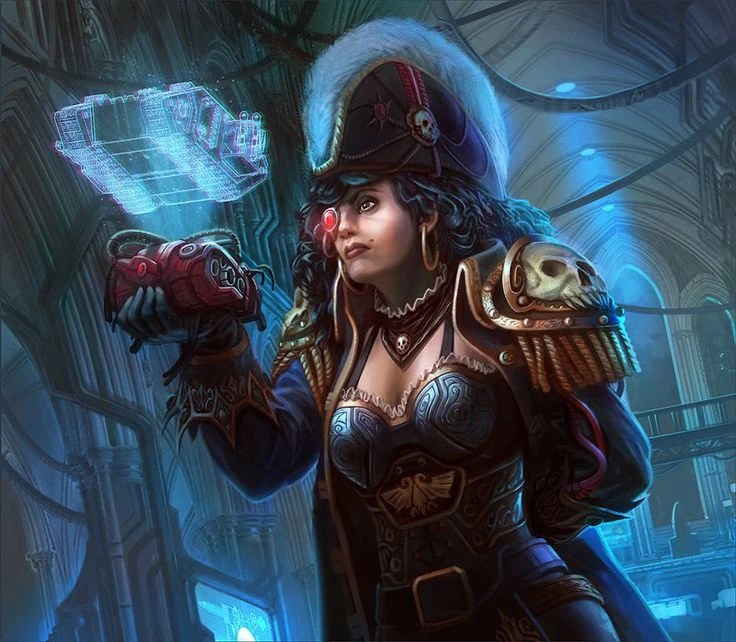 A Rogue Trader examining the hololithic schematic of an STC fragment Artwork © Games Workshop | |
| Abbreviation | STC |
| Origin | Dark Age of Technology, before the Age of Strife |
| Function | Stored and generated designs for any machine colonists might need |
| Custodians | Adeptus Mechanicus |
| Status | No complete system confirmed in Imperial hands; fragments and copies survive |
| Derived designs | Rhino, Land Raider, Land Speeder, Leman Russ, Baneblade, lasgun, Knight suits |
A Standard Template Construct, commonly STC, was an intelligent database built during the Dark Age of Technology that held the designs for every kind of machine human colonists might need, from simple tools to vehicles, weapons, shelters and starship components. Colony fleets carried STC systems so that settlers could build what they needed on any world, from local materials and without expert knowledge. Some systems could design new machines to meet new conditions.[1][2]
No complete STC is known to be in the possession of the Imperium. Almost all were lost or destroyed in the Age of Strife, and what survives are fragments, copies and print-outs, many corrupted by millennia of copying. To the Adeptus Mechanicus these are the most sacred of relics, gifts of the Omnissiah to humanity, and the recovery of even a fragment is an event of great importance. Much of the standard equipment of the Imperium, including the Rhino, the Land Raider and the Leman Russ, is built to patterns recovered from STCs.[1][3]
The search for STCs drives much of the activity of the Mechanicus: its explorator fleets, its technoarchaeologists and its alliances with Rogue Traders. Because the Cult Mechanicus holds that all true knowledge was revealed in the past, a new design is acceptable only if it can be shown to derive from an STC. This doctrine shapes the Imperium's attitude to technology and has made innovation a matter of suspicion.[3][4]
Origins
[edit]STC systems were created in the period of humanity's greatest expansion, when colony fleets left Terra and Mars to settle the galaxy. Each fleet carried an STC so that its colonists could build shelters, power plants, transports and farming machines without technical training. The user asked for what was needed, and the system provided schematics in hololithic form, adapted to the materials at hand. The designs were robust and simple to repair rather than refined. Some Imperial historians believe that the makers of the STCs foresaw the coming collapse and built them to preserve human knowledge through it.[1][2]
Most STCs held only the knowledge needed for an ordinary colony: farm machinery, simple aircraft and ground vehicles. Far fewer contained the designs for advanced devices such as Warp energy taps or the war machines that colonists on dangerous worlds used. Among these were the Knight suits, which became the Imperial Knights of the Knight worlds.[5]
Loss
[edit]The rebellion of the thinking machines known as the Men of Iron and the warp storms of the Age of Strife destroyed the interstellar civilisation of the Dark Age. Imperial scholars cannot say whether the war came before or after the storms. Isolated colonies lost the ability to maintain their STCs, which failed, were destroyed or were forgotten, and on thousands of backwater worlds the surviving designs were debased into crude copies. No confirmed report of a fully functional STC library has been made since the Dark Age.[1]
Recovery and doctrine
[edit]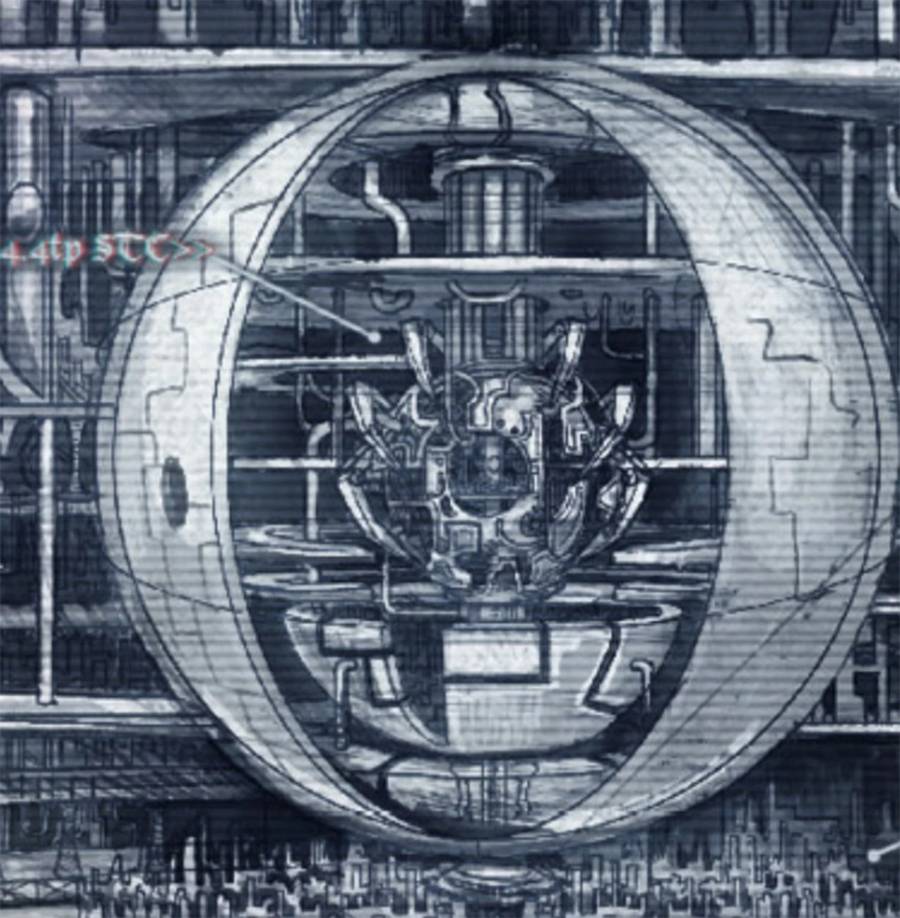
The Mechanicus has searched for STCs since the Age of Strife. Its technoarchaeologists study ancient archives on Mars, its explorator fleets search lost worlds, and it rewards those who bring it fragments. The Martian technoarchaeologist Arkhan Land recovered the templates for the Land Raider and the Land Crawler from the Librarius Omnis of Mars in M30, and his work on anti-gravitic plates led to the Land Speeder. The template for the Leman Russ tank was found by the Space Wolves after they destroyed the Noman xenos, and they named its fruits for their primarch Leman Russ. The Rhino also derives from an STC.[3][6]
Imperial law requires that STC finds be surrendered to the Mechanicus, though this has not always been obeyed. The Blood Angels are said to have kept the designs of the Baal Predator, found during the Great Crusade, on their homeworld of Baal. The Dark Angels have recovered several fragments of their own and keep them within their Chapter.[6]
Some recoveries have caused wars. Even the flimsiest rumour of an STC sends Mechanicus fleets across the galaxy, as in the War of Recovery that began in 104.M36 over reports of technological wonders in the Mortuam Chain and lasted more than a standard century. Fragments are often incomplete, and the Mechanicus may judge a design too difficult to reproduce, as it did the templates for the XV Bellam Ravager and Thermae Missile Suit in M36. In M35 an incomplete and flawed STC was found in a crashed starship on Necromunda by the group that became House Van Saar; its damaged power core unleashes high levels of radiation on those who use it.[3][7]
The doctrine of the Mechanicus holds that the STC represents the perfect knowledge of the Omnissiah, and that it is sacrilege to alter a design or to invent anew. Changes are permitted only as recovered knowledge. Tech-priests who innovate openly risk being condemned as hereteks, and disputes over whether a new design truly derives from an STC have divided the priesthood.[3]
In the Era Indomitus
[edit]The Archmagos Dominus Belisarius Cawl, creator of the Primaris Space Marines and of much of the new equipment of the Indomitus Crusade, has been accused by rival magi of innovation. Cawl's supporters, and Cawl himself, maintain that his designs derive from recovered fragments and from knowledge preserved since the Horus Heresy. The question remains disputed within the Mechanicus.[4][8]
Timeline
[edit]| Date | Event |
|---|---|
| M30 | Arkhan Land recovers the Land Raider and Land Crawler templates on Mars |
| M30 | Space Wolves find the Leman Russ tank template; Blood Angels find the Predator designs on Atium III and keep them on Baal |
| M35 | Damaged STC core recovered on Necromunda by House Van Saar |
| 104.M36 | War of Recovery begins in pursuit of STC fragments |
See also
[edit]

References
[edit]- ^ a b c d Codex Supplement: Dark Angels (9th Edition), pg. 17. Games Workshop. Abnett, Dan. First and Only (novel). Black Library, Chs. 23, 25-26.
- ^ a b Haley, Guy. Death of Integrity (novel). Black Library, pp. 25, 114. Counter, Ben. Dark Adeptus (novel). Black Library.
- ^ a b c d e Sanders, Rob. Adeptus Mechanicus: Skitarius (novel). Black Library. Sanders, Rob. Adeptus Mechanicus: Tech-Priest (novel). Black Library.
- ^ a b Abnett, Dan. Horus Rising (novel). Black Library. McNeill, Graham. Priests of Mars (novel). Black Library, Microcontent 05, Microcontent 15, Microcontent 21.
- ^ Codex Adeptus Mechanicus - Skitarii (7th Edition), pg. 31. Games Workshop. Codex: Dark Angels (6th Edition), pg. 73. Games Workshop.
- ^ a b Codex: Imperial Knights (7th Edition) (Digital Edition), "A Noble Legacy". Games Workshop. Warhammer 40,000: Rulebook (6th Edition), pg. 170. Games Workshop.
- ^ Codex: Dark Eldar (5th Edition), pp. 16-17. Games Workshop. Index Astartes: Centurions (6th Edition). Games Workshop.
- ^ Priestley, Rick. Warhammer 40,000: Rogue Trader (1st Edition). Black Library, pg. 271. Priestley, Rick. Codex Imperialis. Black Library, pg. 42.