
Exterminatus
| Exterminatus | |
|---|---|
| Sanctioned destruction of a world | |
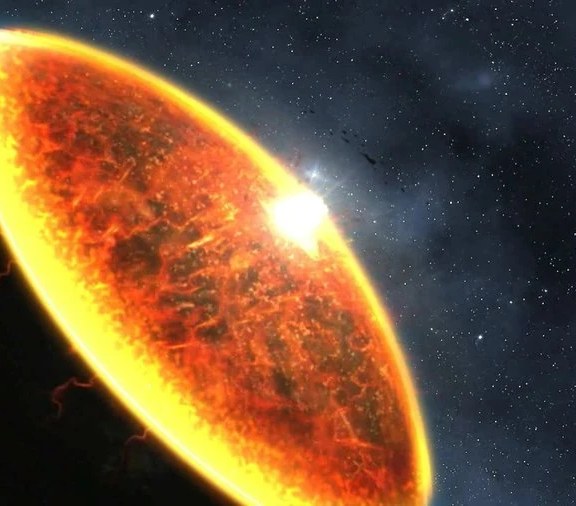 A world consumed by cyclonic fire after Exterminatus, from an Imperial Navy record Artwork © Games Workshop | |
| Authorised by | Any full Inquisitor; the highest authorities of the Imperium; senior commanders of the Imperial Navy, Astra Militarum and Adeptus Astartes |
| Carried out by | Warships of the Imperial Navy, the Inquisition or a Space Marine Chapter |
| Methods | Virus bombs, cyclonic torpedoes, orbital bombardment, nuclear weapons, other means |
| Result | The whole biosphere destroyed; the world left a Dead world |
| Notable instances | Isstvan III (005.M31), Tallarn (010–011.M31), Loki (Macharian Crusade, 392–399.M41), the worlds of Kryptman's Cordon (late M41), St. Josmane's Hope (999.M41) |
Exterminatus, in High Gothic the extermination of an entire world, is the sanctioned destruction of all life on a planet by the forces of the Imperium of Mankind. It is the most extreme action the Imperium takes. The order is given only when a world is judged to pose a threat that could spread to other Imperial worlds and that no lesser means can contain: when the threat of mutation, disease or Chaos heresy is too great to hold back, or when the price of holding or retaking the world is judged too high. It is a last resort.[1][2]
The order may be given by the highest authorities of the Imperium, by a high-ranking commander of the Astra Militarum, the Imperial Navy or the Adeptus Astartes, or by a full Inquisitor. An Inquisitor whose peers judge that he ordered an unnecessary Exterminatus may himself be declared a heretic and hunted down.[1][2]
The weapons used vary with the world. Most are delivered from orbit by warships: sustained bombardment, virus bombs that consume every living thing and leave the planet's crust intact, and cyclonic torpedoes that burn away the atmosphere and may crack the planet itself. Other worlds have been destroyed by more improvised means, such as the dropping of a moon on Loki during the Macharian Crusade or the overloading of a reactor on St. Josmane's Hope in 999.M41. The act was also used as a weapon of treason in the Horus Heresy, when the Warmaster Horus ordered the virus-bombing of Isstvan III in 005.M31, and again when the Iron Warriors virus-bombed Tallarn in 010–011.M31.[1][3][4]
Doctrine and authority
[edit]The justification
[edit]Imperial doctrine accepts that the cost of Exterminatus may be billions of lives. A saying in the Exterminatus Extremis tells those who must give the order that some may question their right to destroy ten billion people, but that those who understand know they have no right to let them live. The Liber Doctrina of the Ordo Hereticus teaches that there is no place for the weak-willed or hesitant, and that no sacrifice is too great.[1][2]
In practice Exterminatus is very rarely used against worlds that are vital or strategically valuable to the Imperium.[1][2]
Who may order it
[edit]The Inquisitor has the absolute authority to order Exterminatus at any time. The only organisations known to have ordered the use of cyclonic torpedoes for the purpose are the Inquisition and the Adeptus Astartes, and a number of Chapter Masters have carried out the act on their own authority.[1][2]
The decision is never without risk to the one who takes it. An Inquisitor who orders Exterminatus will have his course closely scrutinised by his fellow Inquisitors, and if they judge the act unnecessary he may be declared a heretic and hunted down.[1][2]
Methods
[edit]All of the following, with the exceptions listed under other methods, are delivered by warships from orbit. The choice depends on the nature of the world, the nature of the threat and the weapons available to the fleet.[1]
Orbital bombardment
[edit]Bombardment by the guns of an Imperial fleet is the simplest means of Exterminatus, since it needs nothing beyond the weapons already on board. Its force can range from small precision strikes to the release of full thermonuclear weapons. Fleets of the Navy and the Adeptus Astartes have used nuclear weapons in the megaton range to scour worlds of life and leave them radioactive husks on which nothing can live. Where a more thorough result is wanted, specialised munitions such as cyclonic torpedoes are used.[1]
Virus bombs
[edit]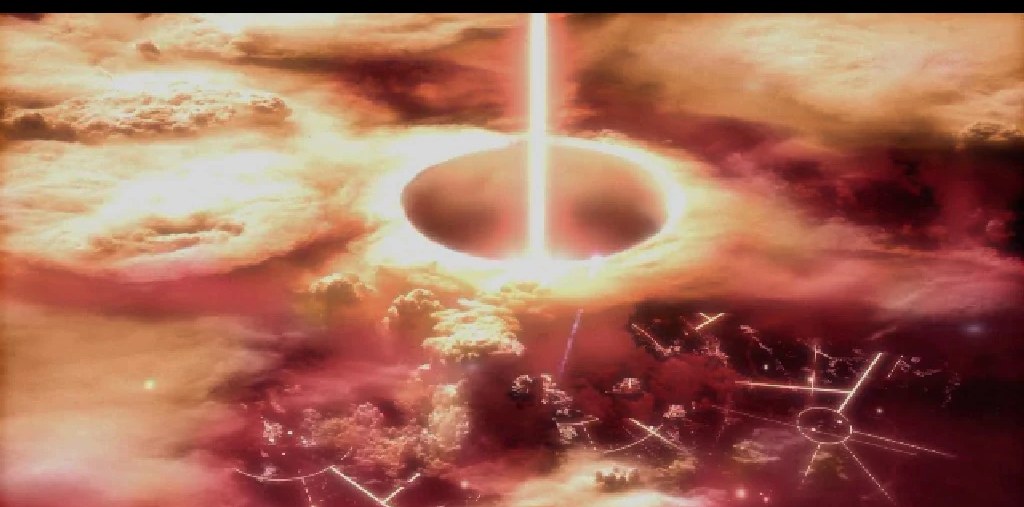
Virus bombs release the life-eater virus, a pathogen engineered to spread at great speed and to destroy every organic cell it touches. Plants and animals alike are reduced to a sludge of biochemicals and gases, both highly flammable. The protocols of Exterminatus direct that a lance strike or an incendiary device be used to ignite these products, so that a firestorm sweeps the planet and destroys whatever life remains. Only those who have retreated into deep and sealed shelters can survive. The speed of the virus is notorious: on Isstvan III in 005.M31 it killed some eight billion people in a matter of solar minutes, leaving a barren world that could just be inhabited. The Space Marines on its surface had to build airtight shelters in haste, and the loss among them was still very heavy.[1][3]
The population of Tallarn survived the Iron Warriors' virus bombardment of 010–011.M31 only because it had built vast underground shelters, but its once green world was changed for ever into a desert.[4]
Cyclonic torpedoes
[edit]A cyclonic torpedo is a weapon of planetary destruction, launched from a ship into low orbit. The class includes many variants, among them the atmospheric incinerator torpedo, but all can destroy the whole biosphere of the target. Some ignite all the free oxygen in the air in a thermonuclear reaction, and others deliver a bombardment of plasma boosted by nuclear fusion. The result is always the same: the atmosphere is burned away, the oceans boil to vapour, and the bare rock of a dead world remains. The blast can be seen from space, and is often strong enough to crack the crust and destabilise the core.[1][5]
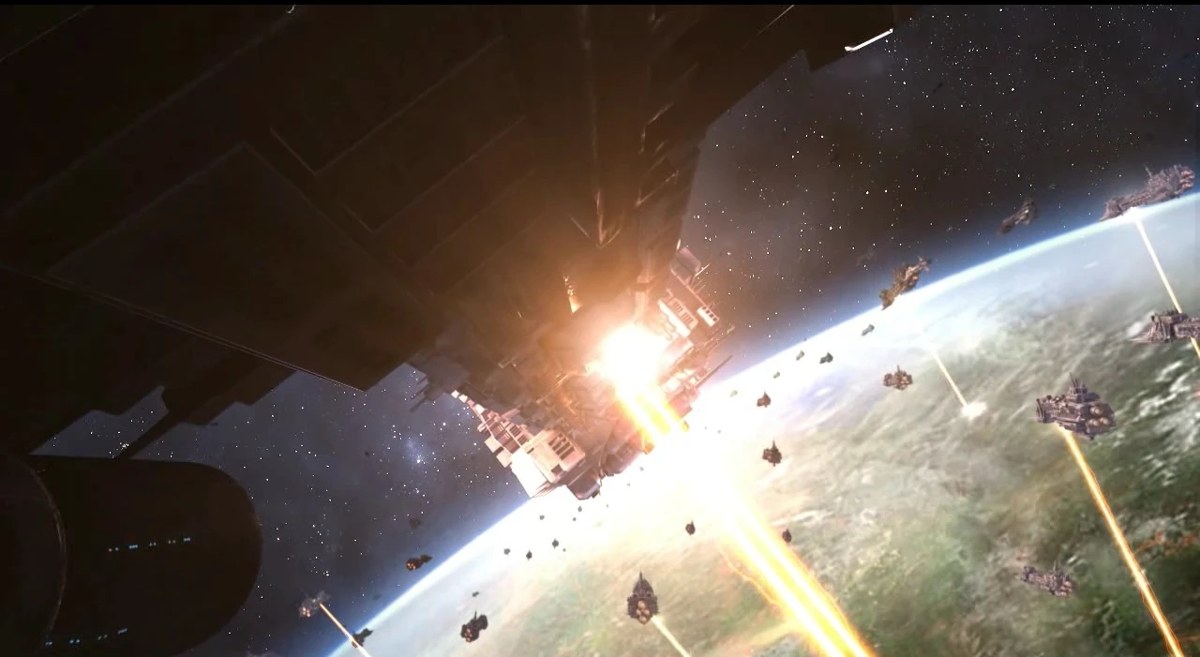
A more exotic class, the two-stage cyclonic torpedo, is made for worlds with no atmosphere or life, such as the tomb worlds of the Necrons. The first stage is an unusually powerful melta charge that bores through the crust and the mantle to the core, and the second stage is a modified plasma charge that destabilises it, so that in most cases the planet is destroyed from within.[1]
Other methods
[edit]During the Macharian Crusade (c. 392–399.M41), Macharius ordered the destruction of the world of Loki. His tech-priests set huge plasma drives on the surface of Loki's moon and moved it into a new orbit. The moon struck the planet and did not destroy it outright. It caused great earthquakes and waves of lava, and the only survivors were the heretics who sheltered in the largest fortresses.[6]
During the Thirteenth Black Crusade (999.M41), the Lord Castellan Ursarkar E. Creed, commander of the whole Cadian Sector, ordered the generatorium on the prison world of St. Josmane's Hope to be overloaded when it seemed that the forces of Chaos would take it. The reactor did not melt down. It exploded with such force that the planet was blown apart.[7]
Notable instances
[edit]| Date | World | Ordered by | Notes |
|---|---|---|---|
| 005.M31 | Isstvan III | Horus | Virus-bombing of the loyalists of four Legions; the opening atrocity of the Horus Heresy |
| 010–011.M31 | Tallarn | Iron Warriors | Virus-bombing of a populous world; survivors fought the Battle of Tallarn from underground shelters |
| 392–399.M41 | Loki | Macharius | Moon dropped on the planet |
| Late M41 | Worlds of Kryptman's Cordon | Inquisitor Kryptman | Destroyed to starve Hive Fleet Leviathan |
| 999.M41 | St. Josmane's Hope | Ursarkar Creed | Generatorium overloaded to deny the world to Chaos |
Records also name other fleets and worlds. The Typhon Primaris campaign of the Third Aurelian Crusade ended with the use of an atmospheric incinerator torpedo,[a] and the Battlefleet Ultima Primus is recorded as having destroyed the world of Dolumar IV with cyclonic torpedoes.[5]
Kryptman's Cordon
[edit]During the invasion of Hive Fleet Leviathan, which began in 997.M41, the Inquisitor Fidus Kryptman of the Ordo Xenos ordered the destruction of a ring of worlds in its path, so that the Tyranids would find nothing to consume. The measure, known as Kryptman's Cordon, was an almost sector-wide scorched-earth policy: every world in the path of the hive fleet was to be evacuated where possible and destroyed. Kryptman was denounced as a Radical, and when migrating Orks claimed a score of the evacuated worlds, the Ordo Xenos declared him Carta Extremis and cast him from the Inquisition.[8]
Consequences
[edit]A world that has suffered Exterminatus is usually left a Dead world. Tallarn became a desert world, and its people later became the Tallarn Desert Raiders, famed armoured regiments of the Astra Militarum.[1][4]
The cost of the act can weigh heavily even on the Inquisition. The cordon of Kryptman showed how deeply the Inquisition itself can divide over it. Exterminatus also bears on the way the Imperium treats other threatened worlds: a daemon world cannot easily be destroyed, because the reality-shifting effects around it prevent the Imperium from trying.[2][9]
Timeline
[edit]| Date | Event |
|---|---|
| 005.M31 | Horus orders the virus-bombing of Isstvan III, destroying the loyalists of four Legions. |
| 010–011.M31 | The Iron Warriors virus-bomb Tallarn. Survivors sheltered underground fight the war that follows. |
| 392–399.M41 | During the Macharian Crusade, Macharius has the moon of Loki moved into a new orbit to fall on the planet.[b] |
| After 999.M41 | The Inquisitor Kryptman orders the destruction of a ring of worlds in the path of Hive Fleet Leviathan. |
| 999.M41 | During the Thirteenth Black Crusade, the Lord Castellan Ursarkar Creed has the generatorium of St. Josmane's Hope overloaded to deny the world to Chaos. |
See also
[edit]

Notes
[edit]References
[edit]- ^ a b c d e f g h i j k l m Warhammer 40,000: Rulebook (6th edition). Games Workshop. p. 154.
- ^ a b c d e f g "Exterminatus". Warhammer 40k Wiki (Fandom).
- ^ a b Swallow, James. The Flight of the Eisenstein (novel). Black Library.
- ^ a b c French, John. Tallarn: Executioner (novel). Black Library.
- ^ a b Warhammer 40,000: Dawn of War II and Dawn of War II: Retribution (video games). THQ.
- ^ King, William. Fall of Macharius (novel). Black Library. pp. 215-217.
- ^ Warhammer 40,000: Fire Warrior (video game), campaign ending cutscene.
- ^ "Fidus Kryptman". Warhammer 40k Wiki (Fandom).
- ^ "Daemon World". Warhammer 40k Wiki (Fandom).