
Feral world
| Feral world | |
|---|---|
| Class of Imperial world | |
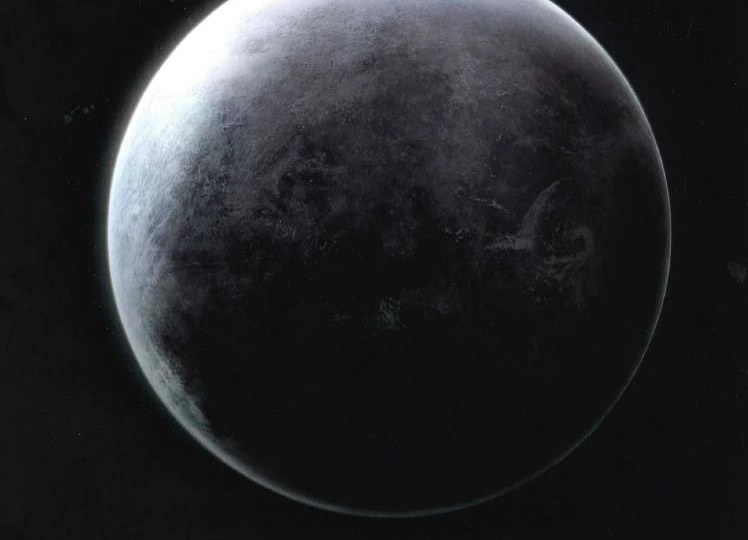 Chogoris, homeworld of the White Scars, recorded in Imperial archives as Mundus Planus Artwork © Games Workshop | |
| Administratum class | Feral world[a] |
| Typical tithe | Solutio Tertius, the lowest grade, or none; Aptus Non for Chapter recruiting worlds |
| Population | Usually 100,000 to 5,000,000, in tribes and clans; a few much larger |
| Technology | Stone Age to early Iron Age; no industry |
| Imperial presence | Often none beyond a governor's outpost or a Chapter fortress |
| Recruited by | Adeptus Astartes; Astra Militarum; Inquisition retinues |
| Related classes | Feudal world; Death world; Chapter Planet |
| Examples | Fenris, Chogoris, Baal Secundus, Davin, Cretacia, Shaprias |
A feral world is a class of planet of the Imperium of Mankind whose human population lives in a primitive condition, as nomadic hunter-gatherers or in early agricultural societies with the technology of a Stone, Bronze or early Iron Age, and without industry. The people may be hunters, herders, raiders or nomads, and their numbers are usually small, from a hundred thousand to some five million. The cause may be an ancient failed colony of the Dark Age of Technology, a religious preference, a cultural choice or the harshness of the environment. Many such worlds were settled in the Dark Age and fell back into savagery in the Age of Strife, keeping only legends of their past.[1][2]
The Administratum usually leaves feral worlds in their primitive state. Like feudal worlds they feel little direct interference by the Imperium and pay only the lowest grades of tithe, commonly Solutio Tertius, and the people may know of the Imperium only as a large group of distant men among the stars. The world is often unsuitable for later colonisation, either for the circumstances that drove its people feral or because the natives resist settlers. The Imperium's interest in them is chiefly military: feral worlders are fierce and hardy, and are recruited by the Astra Militarum and above all by the Adeptus Astartes. Several of the most famous Chapters, including the Space Wolves of Fenris and the White Scars of Chogoris, recruit from feral or near-feral peoples.[3][4]
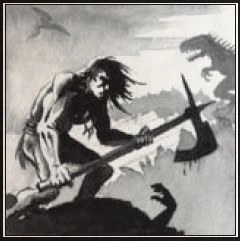
The culture of a feral world varies as widely as its landscape. It may be a Stone Age tribe of ancestor-worshippers who hunt grox and know the Emperor of Mankind only in the most rudimentary way, or a band of wild-eyed road warriors fighting among the toxic ruins of their own civilisation. In the Imperial view such peoples are no more ignorant than the labourers of a hive, who chant over their machines and make the sign of the aquila as a reflex, and both live in a fog of superstition. Feral worlds are as important to the Imperium as any other, and each tithes warriors and materials like the rest.[5][2]
Characteristics
[edit]Feral worlds vary greatly. Some are temperate and fertile, others are also death worlds, and the Administratum frequently records both classes for one planet. A volcanic tundra may hold tribesmen who hunt flying lizards across ash deserts with weapons of black glass, and a swamp may hold nomad clans who wear the bones and hides of great amphibians. Some peoples show the signs of an earlier advanced civilisation, blasted to ruin by war or catastrophe, and live in crude caves among the wreckage of crashed orbital towers that may predate the Imperium or be of xenos make, with spears tipped with fractal metal shavings. Such worlds are defined only by a limited technology and a population that has no choice but to live primitively.[5][2]
A feral world differs from a feudal world in that it has no settled kingdoms, castles or agriculture on any great scale. The line between the two is not always clear: Chogoris, for example, has been recorded as feral, as feudal and as a Legion homeworld at different times.[2]
Relations with the Imperium
[edit]Governors and the Ecclesiarchy
[edit]Like every Imperial world a feral world has a planetary governor, though the post is somewhat different from that on more advanced planets. The governor almost always lives apart from the natives, in a single city of off-worlders or in orbit on a void station, and interferes with the world's affairs only to keep the numbers of psykers and mutants down. Heresy is a regular concern, particularly among warrior cults, which are prone to infiltration by the servants of the Blood God Khorne, and constant watchfulness and regular correction of belief by agents of the Ecclesiarchy are required. Governors and their staff are themselves watched to prevent their "going native", especially where the local belief has made the governor a "Star God".[5][6]
The people are usually kept in order by their faith in the Imperial Creed, and the Ecclesiarchy makes this the first step in bringing such a world into the Imperium. The local religion is commonly displaced by faith in the Emperor, who may be known under other names, as the Sky-Father, the Master of Light, the Star Lord or the father-of-lightning. Even a feral worlder who knows nothing of the Imperium has heard of the Emperor and been raised to revere him. Many Chapters nonetheless forbid interference in the customs of their recruiting worlds.[5][6]
Recruitment
[edit]Space Marine Chapters prize feral worlds as recruiting grounds, because their warriors are used to danger and hardship from birth. Some Chapters live openly among the tribes and are revered as gods or spirits, and others watch from orbit and take aspirants only after trials. The Codex Astartes recommends a feral or death world as the ideal Chapter homeworld. The Astra Militarum also raises feral regiments for assault and irregular warfare, but their soldiers must often be taught to use basic Imperial weapons. When a feral world lies in a war zone its warriors have been pressed into service with only rudimentary training in laser or stub gun weapons, though it is much more common for natives to be chosen for the Adeptus Astartes. Some feral regiments are kept together for generations and build traditions of their own.[3][4]
The feral worlder abroad
[edit]The culture shock of meeting advanced outsiders is a problem on feral worlds. To remove a feral worlder from his planet and expose him to Warp travel can be unsettling and may cause madness or lasting psychological disorder. One who lives in the wider Imperium often keeps his tribal habits, such as an attachment to the bones of dead comrades or the daily application of foul-smelling warpaint, which may hinder him socially. Other habits, such as a manic distrust of psychic witchcraft, may be useful and sensible in the Imperium. Feral worlders have been taken away as part of a manpower tithe or in the warband of an Inquisitor, and keep the primal character of their upbringing.[5]
Culture
[edit]Feral worlders commonly live by oral tradition, keeping the history of their people in songs, sagas and genealogies. Honour, strength and courage in battle are the virtues most valued, and tests of manhood or womanhood are common. They may see weather as a sign from the sky-gods and the ruins of dead civilisations as the relics of ancestors who touched godhood before they were brought low by pride. On Fenris the tribes honour great deeds in sagas, and those taken by the Space Wolves are believed to have gone to the halls of the Allfather. On Chogoris the clans of the steppe honour the horse, the bow and the open sky. Imperial observers note that feral peoples who have long contact with a Chapter often worship its warriors as gods or spirits, a belief the Ecclesiarchy tolerates where it does not contradict the Imperial Cult. When the sky-men call them to serve beyond the edge of the world, many accept their place in the order of the universe and even scorn the off-worlders for relying on metal trickery when the test of a warrior is muscle and bone.[3][6][5]
Notable feral worlds
[edit]The Administratum records many dozens of feral worlds, some of which, such as Aurum, Iphigenia and Iocanthos, are recorded with populations far above the usual, a sign of how loosely the class is used. The best known are given in the table.[2][7]
| World | Notes |
|---|---|
| Fenris | Ice and ocean world of the Segmentum Obscurus; its tribes provide aspirants for the Space Wolves; also a death world; homeworld of Leman Russ, found there by the Emperor in the late 30th millennium |
| Chogoris | Steppe world of horse nomads, recorded as Mundus Planus, with about ten million people; homeworld of Jaghatai Khan, who united its tribes before the Emperor came to it; recruiting world of the White Scars |
| Baal Secundus | Radiation desert moon of Baal, with tribes that provide aspirants for the Blood Angels; scoured by Hive Fleet Leviathan in 999.M41 |
| Davin | Feral world where Horus was wounded by a corrupted blade and turned toward Chaos on the eve of the Horus Heresy (c. 004.M31) |
| Cretacia | Jungle world of giant reptiles; recruiting world of the Flesh Tearers |
| Shaprias | World of the Badab Sector with some twenty to fifty million people |
| Typhon Primaris | World of the Segmentum Ultima that once held about three hundred thousand people and is now empty |
History
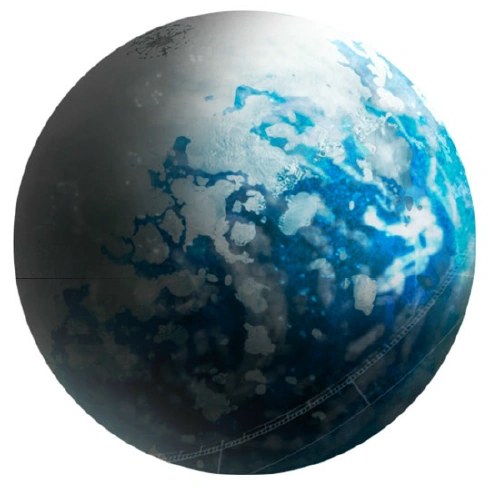
[edit]Most feral worlds were once more advanced. Imperial surveys have found the ruins of Dark Age cities on many of them, and the tribes often keep garbled memories of their ancestors. In the Great Crusade (c. 798.M30–005.M31) many were brought to compliance with little bloodshed, since their peoples could not resist the Imperial armies, and some were found to have been the worlds where a lost primarch had grown up and made himself master of the tribes. The new Legions drew on them freely, and the rolls of the Space Marine Legions show that many of their warriors were taken from feral worlds. Horus was wounded on Davin, a feral world, in about 004.M31, in the year before the Horus Heresy began.[8][2]
Since the opening of the Great Rift in 999.M41 feral worlds have suffered heavily. Lacking defences of their own, they depend on the Chapters and garrisons that watch over them, and several have been depopulated by invasion. The losses suffered by Baal Secundus in the Devastation of Baal in 999.M41 are the best known.[9]
Timeline
[edit]| Date | Event |
|---|---|
| Dark Age of Technology | Worlds that later become feral are settled by colonists.[b] |
| Age of Strife | Colonies lose their technology as contact with Terra fades, and their peoples fall back to tribal life.[c] |
| Late M30 | The Great Crusade finds Fenris and Chogoris and the primarchs Leman Russ and Jaghatai Khan are claimed by the Emperor.[d] |
| Late M30 | The Great Crusade brings many other feral tribes into the Imperium, often by the arrival of a Legion.[e] |
| c. 004.M31 | Horus is wounded on Davin and begins to turn from the Emperor.[f] |
| 005–014.M31 | Feral worlds are caught in the Horus Heresy, and some tribes are recruited by Traitor and Loyalist forces.[g] |
| M41 | Feral worlds supply recruits to the Chapters and the Astra Militarum in the Time of Ending.[h] |
| 999.M41 | The Devastation of Baal scours Baal Secundus; the Great Rift opens. |
| Early M42 | Feral worlds remain under the Adeptus Astartes who first contacted them, and their tribes continue to revere the warriors of the Chapters. |
See also
[edit]

Notes
[edit]- ^ No numeric classification code is recorded in the open registry.
- ^ Estimated; no record gives an exact year.
- ^ Estimated; no record gives an exact year.
- ^ Estimated; accounts give differing years for the two discoveries.
- ^ Estimated; no record gives an exact year.
- ^ Date estimated from the sequence of events leading to the Heresy.
- ^ Estimated; no record gives an exact year.
- ^ Estimated; no record gives an exact year.
References
[edit]- ^ Warhammer 40,000: Rulebook (6th edition). Games Workshop. pg. 153. Warhammer 40,000: Rulebook (3rd edition). Games Workshop. pg. 114.
- ^ a b c d e f Warhammer 40,000: Rogue Trader (1st edition). Games Workshop. pg. 134. Dark Heresy: Core Rulebook (roleplaying game). Fantasy Flight Games. pp. 14-15, 250.
- ^ a b c Codex: Space Marines (6th edition). Games Workshop. pp. 31-32, 37. Imperial Armour Volume One: Imperial Guard and Imperial Navy. Forge World. pp. 10-12.
- ^ a b Imperial Armour Volume Five: The Siege of Vraks, Part One. Forge World. Only War: Core Rulebook (roleplaying game). Fantasy Flight Games. pp. 346-348.
- ^ a b c d e f Dark Heresy: Core Rulebook (2nd edition) (roleplaying game). Fantasy Flight Games. pg. 33. Deathwatch: Rites of Battle (roleplaying game). Fantasy Flight Games. pp. 55-56.
- ^ a b c White Dwarf 305 (UK). Games Workshop. pp. 64-65.
- ^ Codex: Blood Angels (5th edition). Games Workshop. Imperial Armour Volume Nine: The Badab War, Part One. Forge World. pp. 6, 101, 116-123.
- ^ "500 Facts for 500 Stores!", facts 45 and 46. Warhammer Community (20 October 2018). Games Workshop.
- ^ Dark Heresy: Core Rulebook (roleplaying game). Fantasy Flight Games. pp. 249-250. Codex: Blood Angels (5th edition). Games Workshop.