
Iterators
| Iterators | |
|---|---|
| Corps of Iterators of the Great Crusade | |
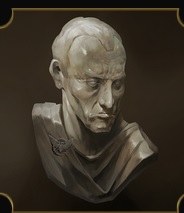 Kyril Sindermann, Primary Iterator of the 63rd Expedition Artwork © Games Workshop | |
| Founded | Early Great Crusade, c. 800.M30 (date estimated) |
| Dissolved | After the Horus Heresy, c. 014–021.M31 (date estimated) |
| Founder | Emperor of Mankind |
| Purpose | Teaching and spreading the Imperial Truth |
| Attached to | The Expeditionary Fleets, the Space Marine Legions and the Imperial Army |
| Notable members | Kyril Sindermann; Hugost Wacim; Golconda Pyke; Sermis Iconialis |
| Successors | In part the Commissars and the propagandists of the Administratum |
The Iterators were the orators, teachers and propagandists of the Imperial Truth during the Great Crusade (c. 798.M30 – 005.M31). The Emperor of Mankind created the corps to carry his secular creed to every conquered world: to explain why the Crusade was just, to break the hold of old religions, and to make new subjects into willing citizens of the Imperium. Iterators travelled with every Expeditionary Fleet, lectured soldiers and Space Marines, and addressed the crowds of newly compliant worlds.[1]
The Horus Heresy (005–014.M31) destroyed the creed they served. The most famous Iterator, Kyril Sindermann of the 63rd Expedition, saw daemons with his own eyes, gave up the Imperial Truth for faith in the Emperor, and became one of the first Inquisitors. The corps did not survive the war. Its work of morale passed in part to the Commissars of the later Imperial Guard.[2]
History
[edit]Purpose
[edit]The Emperor taught that the gods and superstitions of the Age of Strife had nearly destroyed humanity, and that a single rational doctrine would end the quarrels between peoples. The Iterators were the voice of that doctrine. They showed conquered peoples the benefits of Imperial rule and explained to soldiers why the conquest of tens of thousands of worlds was needed, whatever its cost. Above all they worked to replace religious belief with reason and faith in progress. Their success also served a purpose the corps itself did not know: worship of any kind feeds the powers of the Warp, and a godless Imperium starved them. Those few who knew this later called the Imperial Truth the "Great Lie."[1]
Selection and training
[edit]A saying of the Crusade held that one man in a thousand might become a Legion warrior, but only one in a hundred thousand was fit to be an Iterator. Candidates needed insight, eloquence, political judgment and quick intelligence. They were schooled in history, ethics, politics and rhetoric, and in both sides of persuasion: placed in a crowd, Iterators could stir it to enthusiasm, or turn it against a speaker. They often worked in teams, one speaking and others among the listeners. Most lived in the archive chambers of the Legion battle-barges, among records reaching back to the Dark Age of Technology.[1]
Service with the Legions
[edit]Horus valued the Iterators highly. Believing that the Crusade would one day end and his warriors would need a purpose in peace, he asked them to teach his captains and legionaries. The Raven Guard and other Legions kept Iterators of their own. The corps was led by an Iterator Prime; in the last years of the Crusade the office was held by Hugost Wacim.[1][3]
Kyril Sindermann
[edit]Kyril Sindermann was Primary Iterator of the 63rd Expeditionary Fleet and lived aboard the Vengeful Spirit, where he was a friend and tutor to the Luna Wolves captain Garviel Loken. On the world called Sixty-Three Nineteen c. 001.M31 he and the remembrancer Euphrati Keeler saw a daemon possess a Luna Wolves sergeant. Shaken, he searched the archives for a reason why the Emperor, the greatest of psykers, would teach that no such beings existed. Reading from the Book of Lorgar, he summoned a daemon into the archive by accident; Keeler banished it by faith.[3][2]
The experience broke his belief in the Imperial Truth. He joined Keeler in the Lectitio Divinitatus, escaped Isstvan III with her in 005.M31 aboard the Eisenstein, and on Terra visited her in her prison beneath the Imperial Palace. During the Siege of Terra (013–014.M31) he refounded a new order of remembrancers to record the war, and recruited Keeler to it. Imperial records name him afterwards as one of the first Inquisitors, and he called Nathaniel Garro the first martyr of the Imperial Cult.[4][5]
End of the corps
[edit]The Heresy discredited the Imperial Truth. The war proved the existence of the Warp's powers, and on Terra the faithful of the Lectitio Divinitatus grew in number while the Iterators lost their hearers. No act abolishing the corps survives. Its members were absorbed into the offices of the Administratum, or into the new Inquisition, or vanished, in the years of reconstruction after 014.M31. Their task of guarding soldiers' morale and loyalty passed to the Commissars of the Officio Prefectus, and their task of persuasion to the preachers of the Ecclesiarchy.[6][a]
Timeline
[edit]| Date | Event |
|---|---|
| c. 800.M30 | Corps created to accompany the Great Crusade (estimated) |
| c. 001.M31 | Sindermann and Keeler witness possession on Sixty-Three Nineteen |
| 005.M31 | Sindermann escapes Isstvan III on the Eisenstein |
| 013–014.M31 | Sindermann refounds the remembrancers in the Siege of Terra |
| c. 014–021.M31 | Corps dissolved (estimated) |
See also
[edit]

Notes
[edit]- ^ The end of the corps is estimated from the absence of Iterators in records after the Great Scouring (014–021.M31).
References
[edit]- ^ a b c d Abnett, Dan. Horus Rising (novel). Black Library, pp. 172-173. McNeill, Graham. A Thousand Sons (novel). Black Library.
- ^ a b Scanlon, Mitchel. Descent of Angels (novel). Black Library. MacNeill, Graham. Fulgrim (novel). Black Library.
- ^ a b McNeill, Graham. False Gods (novel). Black Library. Counter, Ben. Galaxy In Flames (novel). Black Library.
- ^ Abnett, Dan. Legion (novel). Black Library. Abnett, Dan. Prospero Burns (novel). Black Library.
- ^ Dembski-Bowden, Aaron. The First Heretic (novel). Black Library. Warhammer 40,000: Rulebook (6th Edition), pg. 166. Games Workshop.
- ^ Warhammer 40,000: Rulebook (5th Edition), pg. 102. Games Workshop. Bligh, Alan. The Horus Heresy Book One: Betrayal (Forge World Series). Black Library, pp. 18-22, 80.