
Council of Nikaea
| Council of Nikaea | |
|---|---|
| Conclave of the Great Crusade | |
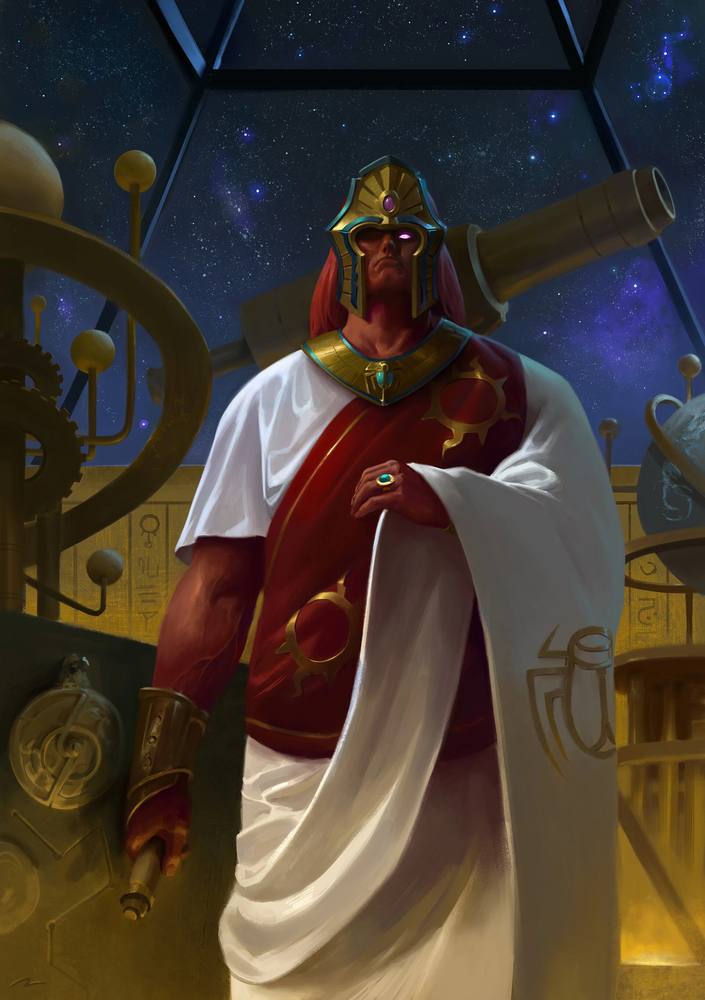 Magnus the Red, primarch of the Thousand Sons, in the robes of a scholar of Prospero, as he was in the years of the council Artwork © Games Workshop | |
| Date | 001.M31 |
| Location | Nikaea, in an ancient amphitheatre |
| Convened by | Emperor of Mankind |
| Convener | Malcador the Sigillite |
| Subject | The place of psykers and psychic power in the Imperium and in the Legions |
| Outcome | The Decree Absolute: Navigators and astropaths sanctioned under central control; sorcery forbidden; Legion Librarius disbanded; office of Chaplain created |
| Principal speakers | |
| For psychic training Magnus the Red Ahzek Ahriman Sanguinius Targutai Yesugei | Against Leman Russ Mortarion Angron Kelbor-Hal The Sisters of Silence |
The Council of Nikaea, also the Edicts of Nikaea or, in the archives of the Blood Ravens, the Hearing of the Thousands, was a conclave called by the Emperor of Mankind on the world of Nikaea in 001.M31, after the Ullanor Crusade. It met to decide whether the psychic gift, which the Great Crusade met on almost every world it reached, was a resource or a mortal danger. Its judgment, the Decree Absolute, sanctioned the Navigators and astropaths under strict Imperial control and forbade sorcery, defined as any bargain with the intelligences of the Warp. It disbanded the Librarius of every Space Marine Legion, and it created the office of Chaplain.[1][2]
The council is remembered chiefly as the trial of Magnus the Red, primarch of the Thousand Sons, and as the moment when the Emperor's anxiety about the Warp became visible to his sons. Magnus obeyed the decree and did not mean to keep it. His Legion's continued studies on Prospero led to the destruction of that world in 004.M31, on the eve of the Horus Heresy. The ban on Librarians stood until the Heresy showed the Imperium that it could not face the powers of the Warp without psykers of its own, and it was lifted in the age of the Codex Astartes.[3]
Background
[edit]Psykers in the Great Crusade
[edit]The Emperor was the most powerful psyker Mankind has produced, and he distrusted the growth of the gift in the people he was gathering. In the Age of Strife the Warp had been the great enemy of human settlement. Worlds had been lost to possession, to cults and to mutant psyker dynasties, and the sight of a child who could move objects had meant a killing. The Great Crusade found those worlds again. Expeditionary fleets landed on planets held by cabals of sorcerers, or by communities that revered their psykers as priests, and the fleet's Remembrancers recorded such scenes in dispiriting numbers.[4]
The Emperor held that the greater part of humanity was not yet evolved enough, in body or in spirit, to use the power without being used by it. The Imperial Truth held that the supernatural was only the natural not yet understood, and the Iterators who preached it found the psychic gift a difficult subject. Practice ran ahead of doctrine. Navigators and astropaths already served the crusade, and a sorcerer was a different thing, and the line between them was not always clear to the officers who had to draw it.[1]
The Librarius
[edit]Psychic mutation appeared in the Legions themselves. Some Legions, notably the Thousand Sons, the Space Wolves, the White Scars, the Blood Angels and the Salamanders, found it common among their recruits. Rather than lose such warriors, the primarchs, led by Magnus, proposed a training programme that would add a combat psyker corps to the ordinary Legion structure. The Emperor sanctioned the first experiments as a way of containing spontaneous outbreaks. The psykers were called Librarians, because they soon became the keepers of their Legion's records and lore, and they proved loyal and useful warriors. Several Legions came to keep a Librarius, and each primarch used it according to his temperament.[2]
The quarrel of the primarchs
[edit]The Librarius divided the primarchs. Leman Russ thought Librarians no better than witches and held that any contest settled by trickery rather than by blood was dishonourable. Mortarion, who had been raised among the sorcerers of Barbarus and had seen what Warp-bargains did to a world, accused Magnus openly. Corvus Corax and Rogal Dorn refused to let their Legions fight alongside those that used Librarians. Others, among them Sanguinius, Jaghatai Khan and Vulkan, thought the gift could be used in the open and disciplined. Russ in particular had fought beside the Thousand Sons in several campaigns and found their sorcery distasteful in the extreme, and the quarrel threatened the stability of the young Imperium.[5]
The Emperor, then preparing to leave the crusade after Ullanor and return to Terra to begin the work of the Webway beneath the Imperial Palace, decided to settle the matter before he left. He summoned the primarchs, the Master of the Mechanicum and the officers of the Council of Terra to Nikaea.[1]
The council
[edit]Assembly
[edit]Nikaea was chosen for the survival of an ancient amphitheatre that seated tens of thousands. The Emperor sat above the dais as arbiter, and Malcador the Sigillite, his Regent, acted as convener and keeper of the order of speech. Constantin Valdor and a delegation of the Adeptus Custodes stood watch. The Legions sent their primarchs and chief officers, including the Chief Librarians of several Legions, and the Mechanicum sent the Fabricator-General, Kelbor-Hal, who spoke strongly against psykers. The Imperialis Armada, the Auxilia and the Ordo Astra Telepathica sent their ranking officers, and the Occulex-Magister of the astropaths affirmed a neutrality that satisfied nobody.[1]
Along one wall were ranged cantilevered boxes screened by a technology of reflected light, which the Acta call the falsehoods. Their occupants could be seen only as shadows and creases of light. The Emperor ordered the boxes so that no witness's testimony would be bent by the fear of those watching, and the Thousand Sons' Chief Librarian Ahzek Ahriman later guessed that several of the hidden figures were primarchs who did not wish to be seen taking a side.[1]
The case against
[edit]The case against the gift was opened by the Sisters of Silence, the blank-souled women of the Emperor's own court, who recited long records of human suffering caused by sorcerers: mutant breeding lines, daemon-ridden lords, cults that fed on their own congregations, and the psychic plagues of the Age of Strife. The primarchs most hostile to psykers followed them. Russ spoke for the Space Wolves, and his Rune Priest Ohthere Wyrdmake, who had made himself a friend of Ahriman in order to understand the Thousand Sons, now spoke against them. Mortarion gave the plainest testimony, since he knew from experience what the Warp could do to a world and its people.[1]
Magnus
[edit]Magnus answered. The Acta describe the effect of his voice on the hall as one of fear and admiration in equal measure. He held that no knowledge was tainted of itself and no pursuit of it wrong, so long as the seeker mastered what he learned instead of becoming its servant. His Thousand Sons, he said, had done so. There was nothing the Legion could not learn and turn to the service of Mankind, and he asked the Emperor to support the study of the Warp rather than ban it. The speech moved many present, and the debate became more evenly divided than the Sigillite had expected.[1]
The third way
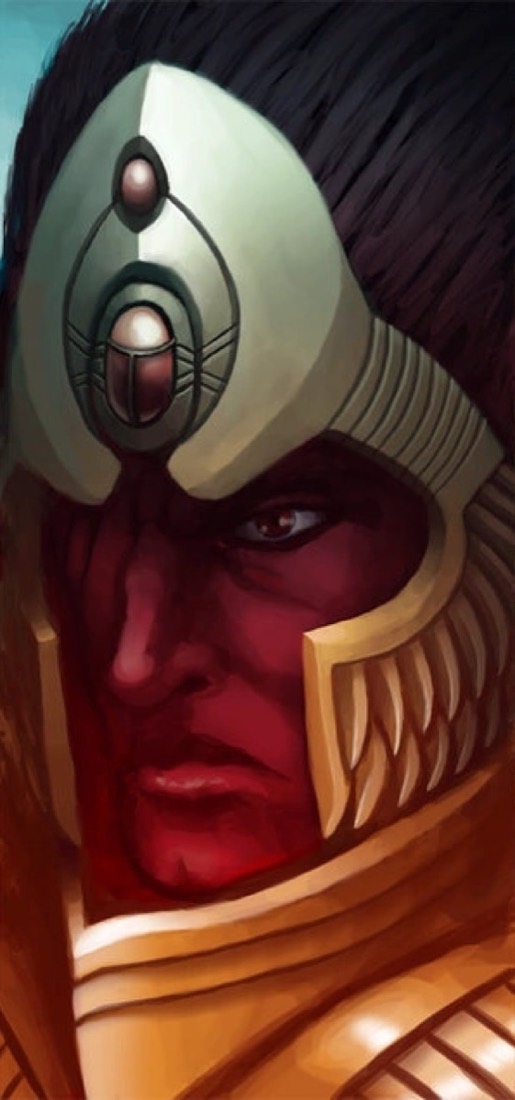
[edit]The compromise was proposed by a body of Librarians from several Legions, who came before the dais together and stood in a half circle to show that they spoke as one voice. Their Epistolary argued that a psyker was like an athlete, a gifted person whose talent should be trained and put to use, and that the gift was no more evil in itself than a sword. Sorcery was something different, a knowledge that had to be sought and bargained for with beings whose price was never certain. They proposed that the Imperium educate all its psykers to serve Mankind and that sorcery be forbidden as the worst of offences against the Imperial Truth. The Stormseer Targutai Yesugei of the White Scars made the same proposal in the name of his Legion.[1]
The Emperor rejected it. The accounts agree that the compromise, which was in the end the policy the Imperium would adopt after the Heresy, was set aside because of what the council had revealed about Magnus. The council had become, in effect, his trial.[1]
The Decree Absolute
[edit]Judgment on Magnus
[edit]Evidence was brought that Magnus had gone on practising sorcery long after the Emperor had told him to stop. The Emperor had trusted him alone with certain secrets of the Warp and the existence of the powers later named the Chaos Gods, on condition that he leave such studies alone, and now it seemed that the primarch had gone further. The exchange between father and son is preserved in the Grimoire Hereticus, an Inquisitorial compilation, and the testimony agrees that the Emperor's anger was great and was held in check only with difficulty.[6]
The ruling
[edit]The Decree Absolute was delivered in a speech that the Imperial Cult later called the Edicts of Nikaea. In it the Emperor said that power is a living thing and that its danger is obsession, that the attempt to learn from the Warp is an attempt to learn from a place of shifting shapes and lies, and that false knowledge is more dangerous than ignorance. He had walked paths that no man could know and understood the secrets that lay hidden there, and those secrets were not for lesser minds. He now saw that he had allowed his sons to delve into matters he should never have let them know existed. No one present would be censured, for the council served unity. But he decreed that no Legion should keep a Librarius, that every Astartes with a psychic gift be returned to the ordinary battle companies and never use it again, and that any who defied him should earn his enmity and bring ruin on his followers.[1]
The rulings of the council as the Imperium has since recorded them were:
- Navigators and astropaths, trained, controlled and licensed by the Imperium, were permitted, because the Imperium could not hold together without them.
- Sorcery, the bargaining with the Warp's intelligences, was forbidden to all.
- The Librarius of every Legion was closed, and the combat psykers of the wider armed forces were to be discharged from that service.
- Every Legion was to create a new office, the Chaplain, modelled on the practice of the Word Bearers, to keep its warriors faithful to the Imperial Truth and to the Emperor's commands.
The Chaplains
[edit]The institution of the Chaplain is the least discussed provision of the council and one of the most lasting. The Word Bearers had long kept a priesthood of their own under their primarch Lorgar, and their chaplains were the model. The Emperor wanted a corps of officers charged with the morale and fidelity of the Legion, and he intended them to preach the Truth rather than a creed. The irony, which the later Ecclesiarchy has noted, is that the Imperial Cult would be served in later millennia by an order whose first model came from the Legion that fell to Chaos first.[7]
Attendance
[edit]The record of attendance in the Acta of the Adeptus Terra Archive lists the principal figures and their positions. The table below gives the most significant, with their recorded stance on the use of psykers.[1]
| Attendee | Office | Stance |
|---|---|---|
| Malcador the Sigillite | Regent of Terra, convener | Not recorded |
| Kelbor-Hal | Fabricator-General of Mars | Strongly against |
| Constantin Valdor | Captain-General of the Adeptus Custodes | Neutral |
| Lion El'Jonson | Primarch of the Dark Angels | Neutral, inclined to censure Magnus |
| Leman Russ | Primarch of the Space Wolves | Strongly against |
| Rogal Dorn | Primarch of the Imperial Fists | Against |
| Corvus Corax | Primarch of the Raven Guard | Inclined to censure Magnus |
| Mortarion | Primarch of the Death Guard | Strongly against |
| Angron | Primarch of the World Eaters | Strongly against |
| Sanguinius | Primarch of the Blood Angels | For |
| Jaghatai Khan | Primarch of the White Scars | For |
| Vulkan | Primarch of the Salamanders | For |
| Roboute Guilliman | Primarch of the Ultramarines | Mildly for |
| Magnus the Red | Primarch of the Thousand Sons | Strongly for |
| Horus | Warmaster | Neutral |
| Lorgar | Primarch of the Word Bearers | For |
Of the Legion officers recorded, Ahzek Ahriman and the Equerry Amon of the Thousand Sons spoke as strongly as their master. The Chief Librarians of the Dark Angels, the Ultramarines and the Salamanders supported the principle of training. Several of those listed, among them Angron, Mortarion, Magnus, Lorgar and Horus, would be counted among the Traitors within a decade, from 005.M31.[1]
Aftermath
[edit]The Legions
[edit]The Librarius of every Legion was closed. In the Thousand Sons the effect was severe: the Legion's culture was built around its Librarians and its libraries, and a large part of its strength was psychic. Magnus accepted the judgment, and in public the Legion obeyed.[3]
Prospero
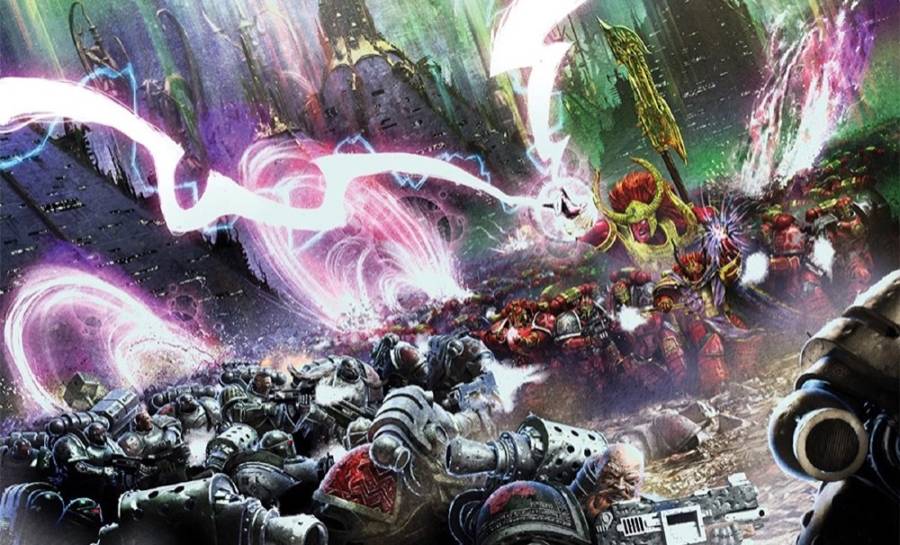
[edit]In practice Magnus did not stop. He and his Legion went on studying such powers in secret on their homeworld of Prospero. The mistake was nearly fatal to the Imperium. When he saw in a vision that Horus was moving against the Throne and sent a warning across the Warp, the working broke the Emperor's wards in the Webway, and the Emperor responded by sending the Space Wolves to bring Magnus to Terra. Prospero burned in 004.M31, and the survivors turned to the powers they had been forbidden to touch.[3] The reasons for the fall of the Thousand Sons are discussed in the article on Magnus the Red.
Legacy
[edit]The Edicts of Nikaea were the law on psykers for ten thousand years in everything but name. The prohibition on Librarians was reversed in the Great Scouring (014–c. 021.M31), when the loyal Legions found that the Traitors fought with sorcerers and daemons and could not be matched by an army that denied itself the gift. The compromise that the Librarians offered at Nikaea became the standing policy: trained and disciplined psykers in the service of the Imperium, with the practice of sorcery and daemonology remaining the gravest of heresies. Each Chapter of the Adeptus Astartes now decides for itself whether to keep a Librarius, and some, such as the Salamanders, regard the old strictures as obsolete, while others keep a deep distrust of psykers.[8]
The Chaplain remained. The office survived the Second Founding of 021.M31 and appears in the Codex Astartes as the keeper of a Chapter's faith. In the 42nd millennium a Chaplain is a priest of the Emperor in all but title, a fact that would have appalled the Emperor of the Imperial Truth.[1]
Timeline
[edit]| Date | Event |
|---|---|
| Late M30 | The Librarius is sanctioned in the Legions at Magnus's urging; the primarchs divide over it.[a] |
| 000.M31 | The Triumph of Ullanor; the Emperor resolves to settle the question before returning to Terra. |
| 001.M31 | The council meets on Nikaea; the Sisters of Silence, Leman Russ, Mortarion and Magnus speak; the Decree Absolute is proclaimed, the Librarius disbanded and the Chaplain instituted. |
| 001–004.M31 | Magnus continues his studies on Prospero. |
| 004.M31 | Magnus's warning breaches the Emperor's wards in the Webway; the Burning of Prospero. |
| 005.M31 | The Horus Heresy opens at Isstvan III. |
| 014–c. 021.M31 | The Great Scouring: the loyal Legions restore their Librarians. |
| 021.M31 | The Codex Astartes and the Second Founding keep the Librarius and the Chaplaincy in every Chapter. |
See also
[edit]

Notes
[edit]- ^ Date estimated from the sequence of events.
References
[edit]- ^ a b c d e f g h i j k l m Goto, C.S.. Blood Ravens: The Dawn of War Omnibus (novel). Black Library, "The Trials of Isador," pp. 270-272.
- ^ a b Kyme, Nick. Salamander (novel). Black Library, Part I, pg. 91.
- ^ a b c McNeill, Graham. A Thousand Sons (novel). Black Library.
- ^ Abnett, Dan. Prospero Burns (novel). Black Library.
- ^ Abnett, Dan. Know No Fear (novel). Black Library.
- ^ Swallow, James. Fear to Tread (novel). Black Library.
- ^ Swallow, James. Garro: Legion of One (Audio Book). Black Library.
- ^ Merrett, Alan. The Horus Heresy - Visions of Heresy: Book One (Art Book). Black Library, pp. 146, 148.